FAQ
General
What is Global Stack USA?
Global Stack USA is a California-based infrastructure development company focused on strengthening the state's emergency resilience. We design and fund modern infrastructure on California's network of public fairgrounds — the systems that help a community stay connected, powered, and protected when fires, outages, evacuations, or other disruptions put public safety at risk. Everything we build is delivered at no cost to taxpayers or to the fairground itself, and all assets remain in public ownership.
What problem is Global Stack USA solving?
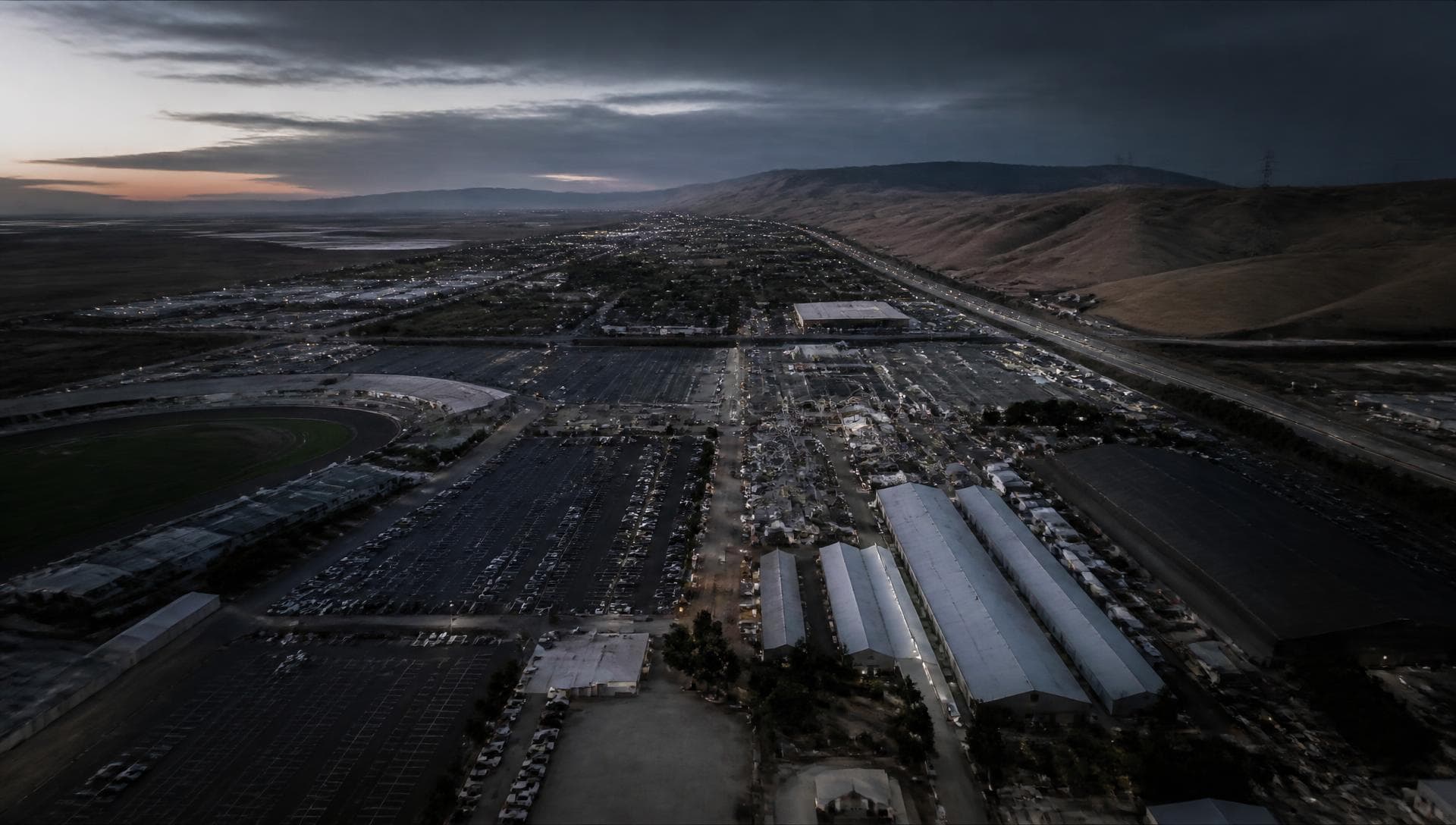
California's fairgrounds are vital public spaces — community hubs, emergency shelters, and cultural anchors. Many are already positioned by the state as emergency-response sites, yet they face serious structural challenges:
- Seasonal, event-driven income leaves year-round operations underfunded
- Declining state subsidies make sustainable budgeting increasingly difficult
- Aging infrastructure is unprepared for modern emergency-response demands
- Outdated technology limits integration with state emergency systems
Global Stack USA was created to close that gap — turning underused public land into resilient, self-sustaining infrastructure that serves the community every day and stands ready when disaster strikes.
Why California fairgrounds specifically?
California is the only state in the nation with a unified, statewide network of public fairgrounds. Distributed across every region — Northern California, the Central Valley, and Southern California — they form a natural, already-permitted backbone for emergency response. No other state has this asset. Global Stack USA was built to activate that network, so that when a wildfire, earthquake, or flood strikes a region, resilient infrastructure is already in place.
Who leads Global Stack USA?
Global Stack USA is led by Daniel Kang (Founder & Chief Executive Officer) and Nick Kovacevich (President). The leadership team is responsible for partnership development, site agreements, and capital coordination across the statewide network.
What We Are Building — and What We Are Not
Is this a data center?
No. This is the most common and most important misconception, so we want to be plain about it. What has sometimes been described as a "data center" is, in fact, an emergency-resilience system. Its purpose is to help keep fire, police, emergency medical services, and local agencies connected and powered when the grid, cell networks, or transportation routes fail. In a fire-prone region, that can be the difference between an evacuation that is coordinated and one that is not.
How is that different from a hyperscale data center?
A hyperscale data center is a building-scale facility — measured in acres — that centralizes thousands of servers in one place, pulls megawatts from the grid, and rejects heat through cooling towers fed by municipal water. Our edge units are the opposite: compact, self-contained appliances, roughly the size of a standard shipping container, that process critical information locally, right where it is needed. Think of the difference between a power plant miles away and a solar panel on your roof.
| Attribute | Hyperscale Data Center | Global Stack USA Edge Unit |
|---|---|---|
| Cooling water | Millions of gallons/year (evaporative) | Zero — sealed closed-loop system |
| Water connection | Dedicated municipal water line required | None — no water connection needed |
| Cooling plant | External towers & chillers | Integrated entirely inside the unit |
| Physical footprint | Building-scale — acres of site | Enclosed appliance — the size of a shipping container |
| Deployment | Permanent construction required | Transport & place — no build-out |
| Power draw | Megawatt-scale grid load | Ordinary commercial load levels |
| Data location | Typically off-state or offshore | Kept in California |
Does it use large amounts of water or power?
No — and this is one of the system's most important distinctions. Every unit uses a closed-loop cooling system in which coolant recirculates continuously inside the enclosure. There is no cooling tower, no make-up water line, and no connection to the municipal water supply, so a unit consumes effectively no water in operation.
For power, a unit connects to the local electrical utility like any other commercial tenant — at ordinary commercial load levels, not the megawatt-scale demand of a traditional data center. Because emergency resilience is the whole point, a system meant to keep a community connected during an outage cannot itself be a heavy burden on the grid. So it isn't.
How does it keep working during a blackout?
The system is built like a safety net. Its components are portable, redundant, and distributed — designed to work together so that emergency communications and power support continue even when one piece goes down, or when the broader grid fails. Units can be paired with on-site or renewable generation, keeping them online precisely when a community needs them most.
Where does the data go — is it kept in California?
Yes. Information is processed and stored locally, within California, rather than routed to facilities owned by out-of-state or international corporations. That matters most for public safety: emergency responders and local agencies keep full control of their own data, and California's emergency communications and imaging stay in-state and secure.
Emergency Access from the Air
What is the vertiport, and why is it part of this?
The vertiport is designed first and foremost as emergency-resilience infrastructure — a way to support medevac, evacuation, first-responder arrival, and urgent supply delivery when roads close or conditions deteriorate. On-site aerial access gives a fairground:
- Rapid medevac transport, with faster response than ground vehicles in congested or fire-affected areas
- First-responder arrival and supply deployment during large-scale evacuation events
- Real-time aerial surveillance and situational awareness across major emergencies
- A permanent, state-ready aerial staging ground for wildfires, earthquakes, floods, and mass-casualty events
Can emergency flights begin before permanent construction?
Yes. A site can begin with a temporary helipad under a simple rental agreement, enabling medevac and emergency-response flights to start before permanent infrastructure is built. Permanent facilities are then phased in over time, alongside the rest of the site build.
The Partnership — at No Cost to the Public
What does "zero cost to the fairground" mean?
Global Stack USA funds the design, construction, and ongoing maintenance of all installed infrastructure through private investment. The fairground contributes land-use rights — typically from 2–5 acres — and retains full ownership of its property throughout the partnership. There is no capital outlay from the fairground operator, no taxpayer funding, and all assets remain in public ownership for the life of the agreement.
What does the fairground actually contribute?
Fairground partners contribute land-use rights for the footprint the infrastructure requires — up to approximately 5 acres, depending on the site. The fairground keeps full ownership of the land and all existing assets, and no existing operations are displaced without collaborative planning.
If it costs the fairground nothing, how is it funded?
The infrastructure generates year-round revenue that is shared with the host fairground, replacing seasonal, event-only income with a stable, sustaining source. That revenue helps fund the fairground's operations and keeps it a viable public asset — while the emergency-resilience capability serves the whole community.
What is a non-binding MOU, and why start there?
A Memorandum of Understanding (MOU) is a pre-agreement that opens formal collaboration between Global Stack USA and a fairground partner. It is non-binding — it creates no financial commitment, no construction obligation, and no legal liability. It simply authorizes Global Stack USA to bring in its design team to assess the site, develop a site-specific plan, and begin planning. Anything that follows requires a separate, formal agreement before anything is built.
Who maintains the infrastructure after it is built?
Global Stack USA provides no-cost maintenance of all installed systems for the life of the partnership, so the fairground gains modern infrastructure without capital expense or maintenance obligations.
Will this be built with California union labor?
Yes. Global Stack USA is bringing this build to the State Building & Construction Trades Council of California because we want it built by California's union workforce — to prevailing wage, with registered apprenticeship pathways and local hire in every region. It is a concrete-and-steel build on public land: multi-story structures with an investment of more than $20 million per site, phased across 50+ sites statewide and projected to support 70,000+ jobs across construction and ongoing operations.
Your Community
How does this benefit the surrounding community — not just the fairground?
The whole point is the broader community:
- Emergency preparedness: public-safety agencies gain the low-latency, high-availability computing they need for real-time operations
- Disaster resilience: fairgrounds become activated emergency hubs with aerial evacuation capacity, blackout-resistant communications, and command-center infrastructure
- Job creation: sustained construction and operations work in every region of the state
- Public-space preservation: the zero-cost model keeps fairgrounds as public assets rather than being sold off to private developers
What does this mean for emergency preparedness specifically?
California fairgrounds are already being positioned as emergency-response hubs by state agencies. Global Stack USA accelerates and enhances that transition by providing blackout-resistant communications for command-center functions during wildfires, earthquakes, floods, and mass-casualty events; on-site aerial access for medevac, first-responder arrival, and evacuation transport; real-time situational awareness over large-scale events; and secure, in-state data processing that keeps emergency communications and imaging in California.
Does this change the character or public nature of the fairground?
No. All assets remain in public ownership throughout the partnership. Existing operations — events, agricultural programs, community gatherings — continue and are enhanced, not displaced. The infrastructure is additive: parking that increases event capacity, aerial access that enables new community services, and edge systems that support the fairground's own operations. The fairground remains a community asset — for good.
Is Global Stack USA mandating communities to accept this?
No. This is an invitation, not a mandate. We have offered the same concept to fairgrounds across the state, and any site that wants to be part of the network can be — any site that does not, isn't. These conversations are meant to inform community-led planning, not to replace it. We welcome questions, scrutiny, and even skepticism, because thoughtful dialogue makes good ideas stronger — and we would rather earn this conversation than win an argument.